

Redefining the Scale of Stagnation: An In-Depth Analysis of the “Small Wins” Theory in Organizational Psychology and Academic Performance
Stagnation in intellectual work rarely stems from a lack of competence; largely, it originates from misjudging the scale of the problem. In academia, scientific research, and strategic management, individuals are frequently crushed by the very grand ambitions they set for themselves. To dissect this psychological phenomenon and find a way out, the academic community often turns to one of the most profound and classic theoretical frameworks of the 20th century: The “Small Wins” theory, introduced by organizational psychologist Karl E. Weick in 1984.
1. Theoretical Origins: “Wicked Problems” and the Limits of Cognitive Arousal Before Karl Weick published his landmark paper “Small Wins: Redefining the Scale of Social Problems” in the American Psychologist, sociologists were deeply preoccupied with the concept of “Wicked Problems,” formulated by Horst Rittel and Melvin Webber (1973). A wicked problem is a challenge of such massive scale and complexity, with blurred boundaries, that any direct attempt to intervene seemingly only spawns new complications. In international research, analyzing global geopolitical landscapes or writing a monumental PhD dissertation are quintessential personal “wicked problems.”
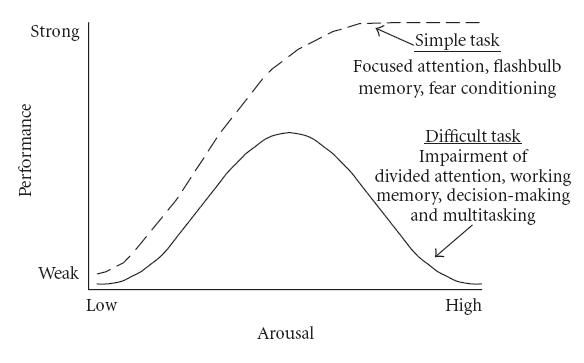
Karl Weick identified a profound psychological paradox: When human beings define a problem as “monumental” or “existential,” they inadvertently push their neurological arousal levels past the optimal threshold. According to the Yerkes-Dodson Law in cognitive psychology, human performance increases in tandem with arousal, but only up to a certain point. When stress and the sheer scale of the problem surpass the peak of this bell curve, performance plummets dramatically. People fall into a state of “analysis paralysis,” triggering primitive defense mechanisms: avoidance, anxiety, and procrastination.
Weick argued: “Massive social problems are often defined in ways that overwhelm our ability to do anything about them.” Demanding a comprehensive solution for a colossal problem is the perfect recipe for helplessness. The only way out is to reframe the problem, shrinking its scale until it falls below the threshold of cognitive threat. That is when the concept of the “Small Win” emerges.
2. The Anatomy and Nature of a “Small Win” Do not confuse a “small win” with a standard “task” or “milestone” on a to-do list. Weick defines it as: “A concrete, complete, implemented outcome of moderate importance.” The elegance of this concept lies in the word “complete.” A task like “read 100 pages of literature” is not a win; it is merely an energy-draining process that yields no packaged result. However, “writing and finalizing 3 paragraphs summarizing a nation’s diplomatic stance” is a small win. It has a shape, it is cognitively tangible, and most importantly, it exists independently. Even if the rest of the project collapses, those three paragraphs remain a completed intellectual asset.
A small win attracts attention precisely because of its low-risk nature. If it fails, the loss is negligible and does not threaten the creator’s self-esteem. But if it succeeds, it becomes an invaluable psychological anchor.
3. The Psychological Mechanisms Behind Small Wins Why do trivial achievements possess the power to turn the tide in projects lasting for years? Three academic mechanisms explain this:
-
First, the formation of “Self-Efficacy”: Albert Bandura, one of the greatest psychologists, asserted that human motivation does not stem from visualizing the final outcome, but from the belief that one has the capability to execute the actions leading to that outcome. A small win provides irrefutable empirical evidence to the brain: “I am capable of controlling my environment.” Every win is a brick building up Self-Efficacy.
-
Second, The Progress Principle: In 2011, Teresa Amabile and Steven Kramer published a large-scale study in the Harvard Business Review, analyzing 12,000 pages of work diaries from knowledge workers. They discovered that the number one factor boosting motivation, creativity, and positive emotions at work wasn’t financial rewards or macro-level encouragement, but the feeling of making progress (no matter how small) in meaningful work.
-
Third, the Dopaminergic Reward Loop: From a neurological perspective, completing a full objective prompts the brain to release dopamine. This neurotransmitter not only brings satisfaction but also reinforces neural pathways, creating a craving to repeat the behavior. Breaking down a problem means creating more dopamine trigger points along a long journey, sustaining endurance rather than facing exhaustion before the finish line.
4. Case Study: The Collapse of the Grand Plan While we cannot verify this as a historically documented event, from a theoretical standpoint, let us observe a representative figure named Minh—a young researcher and PhD candidate preparing for his dissertation defense.
Minh selected a typical “wicked problem”: Analyzing the shift in foreign policies of superpowers (the US, China, Russia) and their impact on geopolitical dynamics in the Mekong-Lancang subregion.
This is a black hole of data. The volume of historical documents, bilateral agreements, and political analysis reports across multiple languages is staggering. Minh’s ambition was grand: He wanted to write a groundbreaking Literature Review chapter, synthesizing all 300 international academic papers within two months.
The result unfolded exactly as the Yerkes-Dodson Law predicted: Cognitive arousal morphed into panic. Upon opening his citation management software and staring at 300 unclassified article titles, Minh’s brain identified it as an unbearable “threat.” For the first three weeks, Minh was paralyzed. He sat before his screen for hours, reading aimlessly, typing a few lines only to delete them, and then seeking comfort by scrolling through social media. His academic self-esteem hit rock bottom. He began to doubt his own research capabilities.
5. Reframing via Small Wins: The Trajectory of Recovery Realizing his stagnation, Minh had to abandon his ambition to “solve the entire geopolitical picture.” He stopped his erratic reading and began applying Karl Weick’s Small Wins strategy.
-
Small Win 1: Shrinking the Boundaries (Miniaturization): He stopped trying to write the Literature Review chapter. Minh assigned himself an extremely narrow, fully controllable goal: Only read and extract data from exactly 3 articles regarding China’s involvement in the Mekong-Lancang Cooperation mechanism in 2023. This goal was so small it could not trigger fear. Within 2 hours, Minh finished. He wrote 1 page of sharp synthesis. It was a “complete” result. That night, Minh’s brain registered its first dopamine reward after 3 weeks of gridlock.
-
Small Win 2: Converting Action into Tangible Output: The next day, Minh applied this principle to designing his methodology. Instead of worrying about constructing the entire research model, he spent one morning solely drawing a flowchart depicting the software-based data collection process. Once drawn and saved as a PDF, it became his second “Small Win.” The chart was independent, clear, and could instantly be attached to any draft.
-
Small Win 3: Seeking External Validation: Weick points out that small wins have a knack for attracting allies. Minh brought just that 1-page summary and the flowchart to his advising Professor. Instead of presenting a messy pile of incomplete ideas, he presented a razor-sharp fragment. The Professor, seeing coherence in a small volume of work, immediately praised him and directed Minh toward a confidential data source on Russia’s policies in the region.
6. The Ripple Effect: Birthing a Network of Achievements The true power of the Small Wins theory lies not in the individual victories themselves, but in their non-linear accumulation. Karl Weick refers to this as the contagion mechanism.
When Minh completed 5 consecutive small wins (finishing the China data subset, systemizing the BibTeX file for 20 core papers, writing the US historical context…), the landscape of his initial wicked problem completely shifted.
-
Informational Level: The small fragments automatically began connecting, revealing research gaps that Minh could never have seen if he kept staring at the project from a distance.
-
Motivational Level: Minh’s Self-efficacy fully recovered. He no longer felt he had to “fight a mountain,” but was simply executing “Small Win #42.”
By the fourth month, Minh had completed his dissertation manuscript without undergoing a single “monumental turning point” or “earth-shattering all-nighter.” Everything was built upon the patience of laying one brick at a time.
7. Macro Application: Building Ecosystems Based on Small Wins This theory holds true not only for individuals but serves as a compass for organizational system design. From a platform perspective, a professional academic ecosystem should never throw users into a vast void demanding they “post a monumental research project” or “declare your entire 10-year academic history.” Brilliant UI/UX design is a design that knows how to “manufacture” small wins for its users.
For instance, when a scholar logs in for the first time, the system suggests a gentle progress bar. Small win one: Successfully verifying an email (earning a badge). Small win two: Filling out a job title and affiliation (Completing 20% of the profile). Small win three: Automatically syncing one article from an international database. By designing this frictionless journey, users continuously receive positive feedback loops, voluntarily diving deeper into the ecosystem to seek larger opportunities—such as applying for international projects or posting recruitment notices for collaborators.
8. Critiques and Pitfalls of the Theory While immensely effective at breaking stagnation, the Small Wins theory is not without weaknesses. Academic critics point out that if abused without a grand strategy, individuals easily fall into the Trap of Trivial Complacency.
If you continuously score small victories, but they are scattered in multiple directions without serving a cohesive logical axis, you only create an illusion of busyness, not true progress. Weick also warned that small wins must be chosen strategically—they must be bricks placed precisely according to a house’s blueprint, not bricks thrown randomly on the ground.
9. Conclusion Greatness is rarely born from spontaneous, intense, and dramatic bursts of effort. On the contrary, it is the silent product of well-organized systems and the ability to sustain motivation through the most tedious periods. Karl Weick’s “Small Wins” theory provides academia and management with an invaluable psychological scalpel. It teaches us: When facing an overwhelmingly massive wall, do not try to knock it down with an impossible force. Remove the loosest brick right in front of you.
True power lies not in the scale of the victory, but in the unbreakable continuity of forward action. Whether analyzing complex geopolitical doctrines or building a talent-connecting platform, this philosophy remains deeply valid: Redefining the scale of a problem is the very first step to mastering it.







◉ 0 Thảo luận Khoa học